
Choosing a contractor for a stamped concrete floor is a decision that affects the appearance, function and maintenance of the finished area. Photographs can help you shortlist designs, but they do not show how the ground was prepared, how the slab was designed or whether drainage and curing were handled correctly.
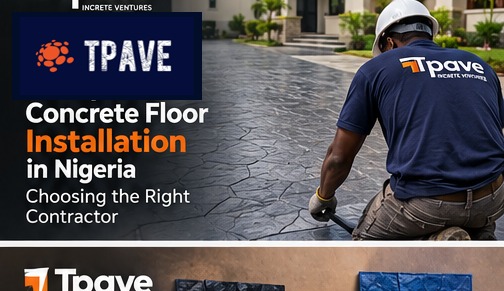
If you are planning a driveway, compound, patio or walkway in Nigeria, use this checklist to compare contractors on the full scope of work. The goal is not simply to find the lowest quotation; it is to understand what you are paying for and whether the proposed method suits your site.
1. Look for relevant completed work
Ask to see projects similar to yours in scale and use. A small decorative panel does not demonstrate how a team manages a large driveway pour. Look closely at pattern alignment, edges, borders, transitions and overall finish. If possible, ask about a completed project that has been in use for some time, not only a freshly sealed surface.
Confirm whether the photographs show the contractor’s own work and whether the team can explain the materials and construction method used. Be cautious of choosing based only on attractive online images without discussing the practical details.
2. Ask about ground preparation
The base below the slab matters. Ask how the contractor will inspect the ground, remove unsuitable material, compact the base and address changes in level. The correct approach depends on the site and intended loading. A driveway may require different consideration from a pedestrian path.
If the quotation says only “stamped concrete floor” without explaining preparation, ask for clarification. Find out what is included and what may become an additional cost if poor ground or hidden conditions are discovered.
3. Discuss slab design, reinforcement and joints
Ask how the slab will be designed for the intended use and whether reinforcement is required. Discuss control joints and how they will be positioned relative to the pattern. Concrete can crack, and a responsible contractor should explain how the design manages risk rather than promising a surface that can never crack.
For areas with vehicle traffic, make sure the contractor understands the expected vehicles and site conditions. Do not assume the same thickness or construction method is suitable for every project.
4. Check drainage and site coordination
Water should flow as planned and should not be directed towards the building or left pooling at an entrance. Ask how levels, drains and connections to existing surfaces will be handled. Any underground utilities that need to cross the area should be coordinated before the concrete is placed.
These decisions are much easier to resolve before the pour. Make sure the scope identifies who is responsible for drainage changes, utility coordination and any work outside the decorative slab itself.
5. Understand the materials and method
A stamped concrete system may use stamping mats, colour hardener, release agent, finishing tools and a compatible sealer. Ask which materials are proposed and whether they are suitable for the intended exposure. Confirm who supplies the concrete and decorative materials and whether product instructions will be followed.
The crew should also explain how it will manage the timing of the pour and stamping sequence. Stamping is time-sensitive, so labour, tools and deliveries need to be planned. Ask how the team will align the pattern and finish edges, corners and drains.
6. Compare written quotations fairly
A useful quotation should state the area, pattern, materials, preparation work, concrete scope, labour, finishing, curing, sealing and exclusions. It should also clarify payment stages, project schedule, site access requirements and how variations will be priced.
Compare like with like. If one quotation includes excavation and base preparation while another excludes them, the totals do not represent the same scope. Ask questions before accepting rather than relying on assumptions.
7. Ask about curing, sealing and maintenance
The contractor should explain how the concrete will be protected after installation, when the area can be used and when sealing will take place. The appropriate schedule depends on the materials and conditions. Ask for written cleaning and maintenance instructions and keep product information for future reference.
Sealer can help protect the surface when correctly selected and applied, but it does not eliminate every stain, crack or maintenance requirement. Avoid claims that a floor is completely maintenance-free.
8. Warning signs to watch for
Be cautious if a contractor refuses to explain the construction method, cannot describe the materials, offers a price without measuring the site, promises that concrete will never crack, or cannot explain curing and drainage. Pressure to pay before the scope is clear is another reason to pause.
You do not need to become a concrete specialist. You do need enough information to compare proposals, understand exclusions and decide whether the contractor has planned the job responsibly.
How Tpave Increte Ventures fits into your search
Tpave Increte Ventures provides stamped-concrete flooring solutions and lists decorative concrete materials and tools through its website. If you are considering the company for a project, share the location, dimensions, intended use and a design reference, then ask for confirmation of service availability and a quotation for the specific scope.
If you already have a contractor, you can also review the available materials and ask which products are appropriate for the system your team intends to use.
Frequently asked questions
How do I compare stamped concrete contractors? Compare similar completed work, site preparation, slab and drainage plans, materials, written scope, schedule and aftercare—not price alone.
Should the contractor inspect the site? A site review is important for measuring, ground conditions, access, levels and drainage.
Can a contractor guarantee no cracks? Concrete can crack. Ask how the design and construction manage the risk and how any concerns are handled.
What should a stamped concrete quotation include? It should clarify area, preparation, concrete, materials, labour, pattern, finishing, curing, sealing, exclusions and payment terms.
How do I contact Tpave? Use the company website to discuss the project and confirm the current contact and service arrangements.
Conclusion and CTA
A reliable stamped concrete installation begins with a clear scope and a contractor who can explain the whole process. Review real work, ask about preparation and drainage, compare written quotations and understand aftercare before committing.
Contact Tpave Increte Ventures to discuss a stamped concrete floor in Nigeria. Share your project location, approximate area, intended use and preferred pattern to request the next step.
Stamped concrete floor in Nigeria: https://tpaveincreteventures.com/stamped-concrete-floor-in-nigeria/
Installation guide: https://tpaveincreteventures.com/installing-stamped-concrete/
Recent designs: https://tpaveincreteventures.com/concrete-floor-stamping-design-in-nigeria/
Contact / website: https://tpaveincreteventures.com/


