
If you are planning a new driveway, compound, patio, walkway or outdoor commercial space, you may be comparing paving stones, tiles and decorative concrete. An Increte floor is one option worth understanding before you decide. It uses decorative concrete techniques to create a patterned, textured or coloured surface that can give an area a finished appearance without laying individual paving units across the whole surface.
In Nigeria, people often search for “increte floor” when they want stamped concrete designs, installation services or the materials used to create the finish. The right choice depends on the area, expected traffic, site conditions, design preference and the quality of installation. This guide explains the basics and how to take the next step with Tpave Increte Ventures.
What is an Increte floor?
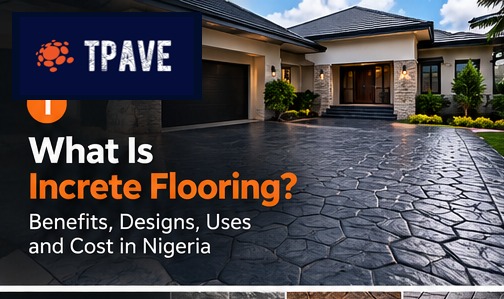
Increte flooring is commonly used to describe decorative stamped concrete flooring. Fresh concrete is finished and imprinted with special texture mats or stamps before it hardens. Colour may be added through a suitable colour hardener or other specified colouring system, while a release agent helps the stamp separate cleanly and can contribute to an antiqued appearance. A compatible sealer may then be applied once the concrete is suitably cured and dry.
The pattern can resemble stone, brick, slate, cobblestone or timber planks. The finished surface is still concrete; the pattern and colour create the decorative effect. The exact appearance depends on the stamp design, colour combination, concrete mix, finishing technique, site conditions and installer’s skill.
Where can an Increte floor be used?
Decorative stamped concrete can be considered for driveways, residential compounds, patios, garden paths, walkways, pool surrounds, entrance areas and selected commercial spaces. It can also be used to create coordinated borders or patterned zones around a property.
The use matters. A driveway must be designed for vehicle loads and ground conditions, while a pedestrian path has different demands. Pool surrounds require particular attention to surface texture, drainage and slip resistance. Interior floors also need a finish suitable for indoor use and the way the space will be cleaned. Tell your contractor how the area will be used before choosing a pattern or sealer.
Benefits and limitations
A well-designed stamped concrete floor can create a continuous decorative surface, offer a wide choice of patterns and colours, and reduce the need to position individual paving units. It can be easier to clean than some surfaces with many joints, although routine care is still necessary. The look can be tailored to complement a building’s exterior.
However, stamped concrete is not maintenance-free and should not be treated as a way to ignore proper concrete construction. Cracking can occur in concrete, and the result depends on subgrade preparation, slab design, reinforcement where specified, control joints, drainage, concrete quality, curing and workmanship. Repairs may also be more visible if the original pattern and colour are difficult to match. Ask about the proposed construction method rather than judging only from a sample photo.
What affects Increte floor cost in Nigeria?
There is no responsible single price that fits every project. The final quotation can depend on the total square metres, site access, excavation and base preparation, drainage requirements, concrete thickness and specification, reinforcement, pattern complexity, colour choices, borders, labour, equipment, finishing, curing and sealing. Transport and location can also affect the overall cost.
For a useful estimate, prepare the approximate length and width of the area, the property location, whether vehicles will use it, the current ground condition and examples of the finish you like. Ask the installer to explain what is included in the quotation and what would count as additional work. Compare quotations on the same scope rather than choosing by the lowest total alone.
How to choose the right design for Increte flooring
Start with the building and the purpose of the area. Stone and ashlar patterns can suit a formal entrance; brick patterns may complement traditional architecture; plank patterns can create a timber-inspired look without using actual wood. Large patterns can appear calmer across a wide driveway, while smaller patterns may be more suitable for compact areas. A border can help define the edge, but too many contrasting colours can make a space feel busy.
Ask to see real completed work and, if possible, physical colour samples. Colours on a phone screen are only an approximation. Consider how dust, rain, sunlight and regular use may affect the way the surface looks over time.
Materials and installation quality
A typical stamped concrete system may require properly specified concrete, suitable stamping mats, colour hardener where specified, release agent, finishing tools and a compatible sealer. Not every project uses exactly the same products, and the manufacturer’s instructions should guide coverage, timing, application and curing.
Timing is critical because stamping must happen while the concrete is at the correct stage. Too early and the surface may deform; too late and the stamp may not create a clear impression. The team should plan the layout, tool sequence, labour and weather conditions before the pour begins. Ask who will supervise the work and how the team will manage joints, drainage, edges and curing.
Why contact Tpave Increte Ventures?
Tpave Increte Ventures provides decorative stamped-concrete flooring solutions and supplies materials used in the process, including colour hardener, antique release agent, sealers and stamping tools. The company’s website also presents product options and examples of stamped concrete work. If you are deciding between hiring an installer and purchasing materials for your own team, explain your project and ask which route is appropriate.
Start by sharing the location, approximate area, intended use and preferred pattern. These details help make the conversation more practical and reduce the chance of comparing unsuitable options.
Frequently asked questions
Is an Increte floor the same as stamped concrete? The terms are often used together in the Nigerian market to refer to decorative concrete that has been textured or patterned with stamps. Confirm the exact system and finish with your installer.
Can it be used for a driveway? It can be considered for driveways when the slab, base, concrete specification and construction method are designed for expected vehicle loads.
Does stamped concrete crack? Concrete can crack. Proper preparation, slab design, joint planning, curing and workmanship help manage risk but cannot honestly guarantee a crack-free surface.
How much does an Increte floor cost per square metre? Cost depends on site conditions, area, design, materials and construction requirements. Request a project-specific quotation.
Can I buy the materials without hiring an installer? Materials may be purchased separately, but successful installation requires appropriate tools, timing and experience. Confirm product suitability and instructions before buying.
Conclusion and next step increte flooring
An Increte floor can provide a patterned, coloured concrete finish for suitable residential and commercial spaces. The best result starts with the correct design and a construction plan suited to the site—not simply a stamp pattern or a low quotation.
Contact Tpave Increte Ventures to discuss your flooring project or ask about stamped-concrete materials. Share your location, approximate area, intended use and a design reference so the next step can be based on your actual needs.
Suggested internal links
Stamped concrete flooring in Nigeria: https://tpaveincreteventures.com/stamped-concrete-floor-in-nigeria/
Concrete floor stamping designs: https://tpaveincreteventures.com/concrete-floor-stamping-design-in-nigeria/
Stamped concrete materials: https://tpaveincreteventures.com/increte-stamped-concrete-floor-materials-in-nigeria/
Shop: https://tpaveincreteventures.com/shop/


