
Concrete stamping creates texture and pattern by imprinting fresh concrete with specialised mats. The method can create a stone, brick, slate or plank-inspired appearance, making it a decorative option for driveways, patios, walkways and selected commercial areas.
People searching for “stamping floor” may be researching the process, comparing designs or looking for tools and materials. Understanding the basics helps you make better decisions, but stamping is time-sensitive: the concrete must be at the right stage, and the crew needs to plan the sequence before the pour. This article explains the process and common mistakes to avoid.
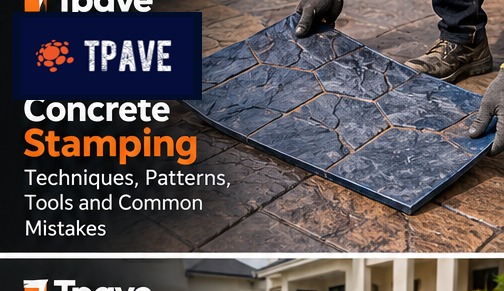
How concrete stamping works
The installer places and finishes concrete to the project specification. If the system uses a colour hardener, it is applied and worked into the surface according to instructions. A release agent is then applied where required, and the stamps are pressed into the concrete when it can support the imprint without excessive sinking or tearing.
The crew aligns the first row, follows the intended sequence, checks the texture and continues across the slab. Edges and areas around drains or walls may require smaller tools or detail work. After stamping, the concrete must be protected and cured appropriately, and the surface may be cleaned and sealed when conditions allow.
Common pattern types stamping floor
Stone and ashlar patterns create a natural-stone look; slate patterns provide a textured, irregular appearance; brick and cobblestone patterns offer a more structured layout; and wood-plank stamps imitate the lines of boards. Border mats and rollers can be used to create a defined edge or detail.
Choose the pattern according to the area and building. The pattern scale, repeat, border and alignment all influence the result. Before the job begins, decide where the first row will start and how the pattern will meet edges, steps, drains and other surfaces.
Tools used for stamping floor
The main tools may include flexible or rigid stamping mats, texture skins, edge tools, floats, trowels, edgers, rollers and tamping tools. The exact set depends on the pattern and system. Stamps often have a recommended sequence so the pattern repeats correctly and the edges fit together.
Tool selection is not simply about having the largest collection. The crew must know how to place, align, press and move the mats without damaging the fresh surface. Ask whether the set includes the tools needed for the main field and the edges, and whether the crew has practised the sequence before starting a large pour.
Timing: one of the most important factors of stamping floor
Fresh concrete changes as it sets. If the crew stamps too early, the surface may deform, the mat may sink excessively or the pattern may become distorted. If the crew waits too long, the imprint may be shallow or difficult to form. Temperature, wind, sun, mix characteristics and slab size influence the working window.
Experienced crews plan the pour, staffing, tools and material placement in advance. They assess the surface rather than relying only on a fixed number of minutes. A test imprint in a suitable area can help indicate whether the concrete is ready, but the crew should follow its training and the system’s requirements.
Common mistakes and how to reduce them
Poor site preparation: weak or uneven ground can affect the slab. **Insufficient drainage planning:** water may collect in unwanted places. **Unplanned joints:** cuts and joints can interrupt the pattern or be placed poorly. **Misaligned first row:** the error can continue across the floor. **Incorrect product timing:** colour hardener, release agent and sealer each have application requirements. **Inadequate curing:** the surface may not develop as intended. **Using incompatible products:** can affect appearance, adhesion or performance.
The best way to reduce these risks is to agree on the construction method before the pour. Confirm the area dimensions, pattern layout, concrete specification, tool sequence, product instructions, curing plan and aftercare. A good-looking stamp cannot repair a poorly built slab.
Colour, release agent and sealer
Colour hardener may be used to introduce colour and improve surface characteristics when applied correctly. Release agent helps the stamp separate and can create a secondary colour effect depending on the product. A compatible sealer may enhance the appearance and provide some protection.
These products serve different purposes and should not be treated as interchangeable. Check the manufacturer’s guidance for coverage, timing, surface conditions and compatibility. Avoid applying a sealer to concrete that has not reached the conditions specified by the manufacturer.
DIY or hire a professional?
A small practice panel may help a trained crew test tools and colour combinations, but a full driveway or compound is a different commitment. The team must manage the concrete delivery, work pace, labour, pattern sequence and finishing window. A mistake across a large slab may be difficult to correct without visible differences.
If you are a property owner, ask to see comparable completed projects and request a clear quotation. If you are a contractor, make sure the crew has the equipment and experience needed for the planned area and pattern.
Frequently asked questions
Can I stamp already hardened concrete? Traditional stamped concrete is imprinted while fresh. Other resurfacing or overlay systems may create textures on existing surfaces, but they are different methods and need separate assessment.
Why is a release agent used? It helps prevent the stamping mats from sticking and may contribute colour contrast, depending on the product.
What causes unclear patterns? Timing, concrete consistency, tool placement and pressure can all affect the imprint.
Do I need a sealer? A suitable sealer is often part of the system, but product choice and timing should follow the manufacturer’s instructions and site conditions.
Where can I get stamping tools in Nigeria? Check Tpave Increte Ventures’ online shop and confirm the current stamp set, availability and suitability for your intended work.
Conclusion
Successful concrete stamping depends on preparation, timing, suitable materials and a planned tool sequence. Before starting, confirm the pattern, slab design, drainage, concrete specification, products and curing process.
For stamping mats, colour hardener, release agent, sealers or project discussions, contact Tpave Increte Ventures with the project details and the pattern you want to achieve.
Suggested internal links
Installation guide: https://tpaveincreteventures.com/installing-stamped-concrete/
Stamped concrete materials: https://tpaveincreteventures.com/increte-stamped-concrete-floor-materials-in-nigeria/
Shop stamping mats: https://tpaveincreteventures.com/product-category/mat/
Shop: https://tpaveincreteventures.com/shop/


