
A good stamped concrete floor depends on more than the pattern. The materials must work together, suit the intended application and be used at the right stage. Buying a stamp without the right finishing tools or choosing a sealer that does not suit the exposure can complicate the job and affect the result.
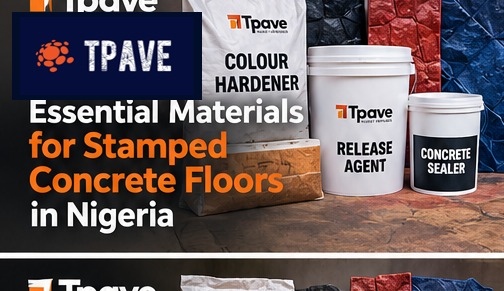
If you are a contractor, builder or property owner sourcing materials in Nigeria, this guide explains the main product categories, what each one does and what to confirm before placing an order. Product specifications and application instructions differ, so always use the manufacturer’s guidance for the exact product you purchase.
1. Concrete stamping mats
Stamping mats create the texture and pattern in the fresh concrete. Patterns may resemble ashlar stone, slate, cobblestone, brick or wood planks. Some projects also use border mats, rollers or smaller tools to finish edges and detail areas.
Choose mats based on the pattern, dimensions of the project, intended use and the skill of the crew. The stamp sequence and layout matter: the first row guides the rest, and the tools must fit together as intended. Before buying, confirm the pattern name, dimensions, material, set contents and whether additional edge or detail tools are required.
2. Colour hardener
A colour hardener is a surface-applied product used in certain decorative concrete systems to introduce colour and improve surface characteristics when correctly applied. It is typically broadcast onto freshly placed concrete and worked into the surface according to the product instructions.
Colour hardener is not a paint to apply casually after the slab has hardened. Timing, coverage, concrete condition and finishing technique are important. Ask the supplier which concrete applications the product is designed for, what colours are available, how much is required for your area and how it should be stored and applied.
3. Antique release agent
A release agent helps stamping mats separate from the fresh concrete without pulling or damaging the imprint. Depending on the product and method, it can also contribute contrasting tones that create an aged or antiqued appearance.
Release agents are not interchangeable in every situation. Confirm whether the product is a powder or liquid, which mats and concrete systems it is intended for, the recommended application method and the cleanup procedure. Use only the specified quantity and follow appropriate handling precautions.
4. Concrete sealer
A compatible sealer can help protect the finished surface from some staining, abrasion and weather exposure, while also influencing the colour depth or sheen. The correct choice depends on whether the surface is indoors or outdoors, the expected traffic, moisture conditions, desired appearance and manufacturer compatibility requirements.
Do not choose a sealer based only on whether it looks glossy in a photograph. Ask about surface preparation, drying conditions, application method, ventilation where relevant, slip considerations and maintenance. Too much product or application at the wrong time can create problems. Follow the product instructions rather than assuming every sealer uses the same schedule.
5. Finishing and detailing tools
The tool list depends on the job and stamping system. It may include floats, trowels, edgers, border rollers, tamping tools and detail tools. Each has a purpose in levelling, finishing edges, compacting or detailing the surface. Using an unsuitable tool can affect the final texture and alignment.
Contractors should match the tools to the concrete method, stamp pattern and working conditions. If you are building a new crew or replacing tools, confirm what is required for the specific project rather than purchasing a large set without a clear plan.
6. Concrete and base materials
The concrete itself is a critical part of the system. The mix should suit the intended loads and the design requirements, and the ground below it must be prepared appropriately. Depending on the site, the job may also require base material, formwork, reinforcement and drainage work.
Decorative products cannot compensate for poor site preparation or an unsuitable slab. Before calculating decorative materials, establish the area dimensions and the construction scope. If vehicles will use the surface, tell the contractor so the slab can be designed accordingly.
How to calculate what you need
Start with the measured area and the layout. Then check each product’s coverage information for the specific application. Coverage can change with surface condition, application method, desired colour effect, product type and wastage. For stamping mats, calculate the tools and sequence needed to cover the area without disrupting the work. For colour hardener, release agent and sealer, follow the product’s published instructions.
Do not rely on a universal quantity per square metre unless it is confirmed for the exact product and conditions. A supplier can help identify the product, but the installer should confirm the project quantities and method.
Checklist before buying
Before ordering, confirm: (1) the area and intended use; (2) the selected pattern and stamp set; (3) the concrete specification and timing plan; (4) the required colour and release system; (5) the appropriate sealer; (6) finishing and edge tools; (7) product coverage and packaging; (8) storage and handling instructions; and (9) delivery and availability. Keep product labels and technical information for the crew.
If you are not the installer, ask your contractor for a written materials list. This helps prevent duplicate purchases and makes it easier to check that the products suit one another.
Where to source stamped concrete materials in Nigeria
Tpave Increte Ventures lists stamping mats, colour hardener, antique release agent, sealers and related tools through its online shop. Review the current product listings and contact the company to confirm availability, suitability, packaging and current prices before ordering. Do not assume a product is appropriate for every project simply because it belongs to the stamped-concrete category.
Frequently asked questions
What are the main materials for a stamped concrete floor? Depending on the system, the job may require concrete, stamping mats, colour hardener, release agent, finishing tools and a compatible sealer, plus the necessary base and construction materials.
Can I use any sealer on stamped concrete? No. Choose a product compatible with the surface, previous products and exposure conditions.
How much colour hardener do I need? Calculate from the manufacturer’s coverage guidance for the selected product and application, not a generic estimate.
Can beginners install stamped concrete? The process is time-sensitive and requires preparation, suitable tools and experience. Training and guidance are advisable before taking on a customer project.
Where can I buy the materials? Browse Tpave’s shop and confirm current stock, product details and delivery arrangements directly with the company.
Conclusion and CTA
Selecting the right materials begins with understanding the job. Choose the pattern and tools first, then confirm the concrete specification, colour system, release agent and compatible sealer. Check coverage and instructions before buying, and do not let decorative products replace proper construction.
Visit the Tpave Increte Ventures shop or contact the team with your location, project area, intended use and materials list to discuss suitable products.
Suggested internal links
Tpave materials guide: https://tpaveincreteventures.com/increte-stamped-concrete-floor-materials-in-nigeria/
Shop all products: https://tpaveincreteventures.com/shop/
Stamping mats: https://tpaveincreteventures.com/product-category/mat/
Installation guide: https://tpaveincreteventures.com/installing-stamped-concrete/


